
Homeopathy for Gut Dysbiosis
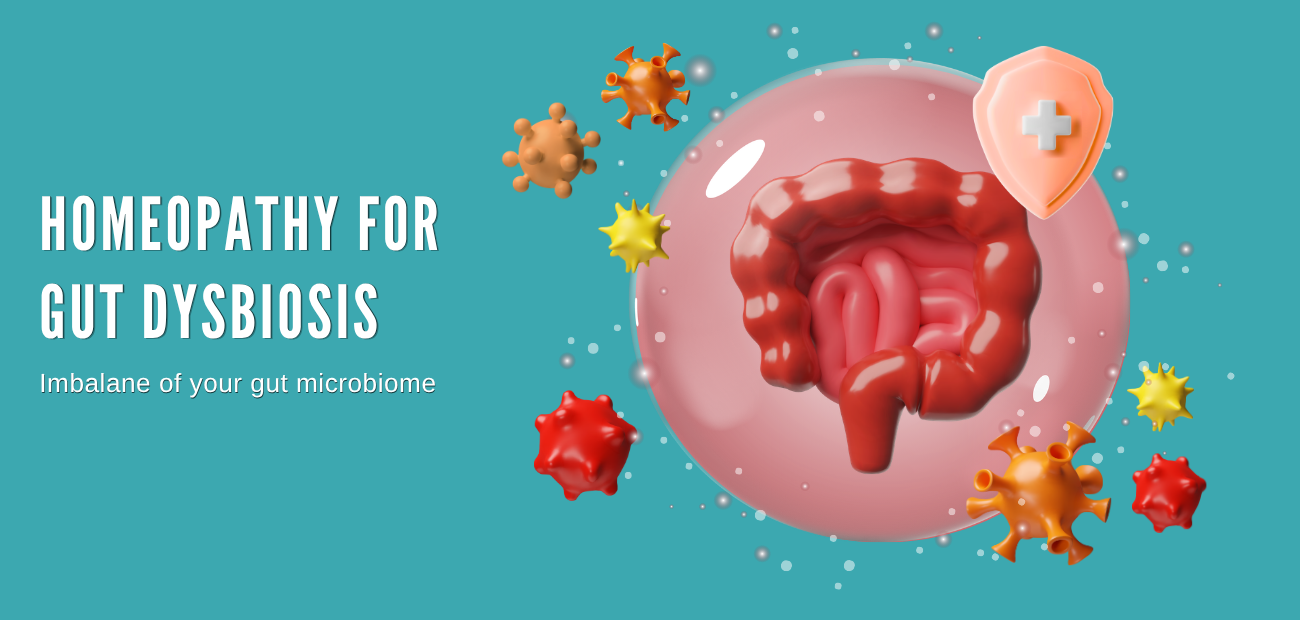
Is Your Gut Making You Sick?
Bloated after every meal? Exhausted for no reason? Struggling with your weight, mood, or sleep — and nobody can explain why? The answer might might be in your gut.
Most of us grow up thinking the gut is just a digestion machine. Food goes in, gets broken down, waste comes out. Simple.
But science has completely changed this picture over the last two decades. Your gut is now understood to be one of the most powerful systems in the entire human body — influencing not just what you digest, but how you feel, how you think, how well you sleep, how easily you gain weight, how strong your immune system is, and even how your brain ages.
And at the centre of all of this is something called the gut microbiome — the trillions of tiny living organisms that call your digestive system home.
Understanding your gut microbiome might be the most important step you take towards understanding your health.
You’re More Bacteria Than Human — And That’s a Good Thing
Here’s a fact that surprises most people: your body contains more bacterial cells than human cells. Your gut alone is home for trillions of microorganisms — bacteria, fungi, viruses, and other tiny life forms — representing anywhere from 500 to 1,000 different species.
Together, they make up your gut microbiome. And they carry approximately 3 million bacterial genes inside you, compared to just 25,000 human genes. That means 99% of the genetic material in your body actually belongs to your microbiome.
This community isn’t just along for the ride. They are actively working — producing vitamins, training your immune system, regulating your hormones, communicating with your brain, and helping determine how your body responds to everything from the food you eat to the stress you’re under.
When this community is thriving, you feel it. When it’s disrupted, the effects can ripple through your entire body in ways that are often hard to trace back to the gut — which is exactly why so many people spend years feeling unwell without a clear answer.
Your Microbiome Is Completely Unique to You
No two people have the same gut microbiome — not even identical twins. Yours has been shaped by a remarkable number of factors, many going all the way back to before you were born.
Your mother’s health during pregnancy, whether you were born vaginally or by C-section, whether you were breastfed, and the bacteria passed to you through skin contact in those early weeks — all of these laid the foundation of your microbial community.
Through childhood, your microbiome grew richer and more diverse with every new food, every pet, every outdoor adventure, every illness — and unfortunately, every course of antibiotics.
By adulthood, your microbiome settles into something more consistent. But it never stops changing. Every meal you eat, every night of sleep, every period of stress, every medication you take continues to shape and reshape it.
This is actually empowering. It means your gut health today is not fixed. It is a living, responsive ecosystem — and with the right approach, it can be improved at any age.
When Your Gut Gets Out of Balance
A healthy gut maintains a careful balance between beneficial bacteria (which protect and nourish you), neutral bacteria (which coexist peacefully), and a small number of potentially harmful bacteria that are kept firmly in check.
When harmful bacteria start to outnumber the good ones — it’s called dysbiosis.
Think of your gut like a garden. When conditions are right, the flowers bloom and the soil is rich. But when the weeds take over, the whole garden suffers.
Dysbiosis doesn’t always cause obvious digestive symptoms. It can show up as persistent fatigue, difficulty losing weight, low mood, brain fog, poor skin, frequent infections, or disrupted sleep. Because these symptoms don’t obviously point to the gut, they’re often investigated and treated in isolation — which is why many people spend years going around in circles without getting better.
Common causes of dysbiosis include:
- A diet high in sugar, refined carbohydrates, and ultra-processed foods
- Frequent or long-term antibiotic use
- Chronic stress
- Poor or disrupted sleep
- A sedentary lifestyle
- Certain medications, including anti-inflammatory drugs and antacids
- Simply getting older
Many of these are unavoidable facts of modern life — which is precisely why gut dysbiosis is so widespread, and why addressing it is so important.
Your Gut and Your Weight: It’s Not Just About Calories
If you’ve ever felt like you’re “doing everything right” with your diet and still not losing weight, your gut microbiome may be part of the reason.
Healthy gut bacteria produce compounds called short-chain fatty acids when they break down the fibre in your food. These compounds send signals to your brain to say “I’m full” while also helping your body use insulin properly and regulate how much fat you absorb.
When your gut is out of balance and beneficial bacteria are depleted, these signals weaken. Your hunger-suppression system becomes less effective. Your body absorbs more fat. Your metabolism slows — and none of this shows up on a standard blood test.
There’s also a more alarming mechanism at play. A diet high in fat and sugar changes gut bacteria in ways that increase a toxic substance called LPS in the gut. This leaks into the bloodstream, activates the immune system, and triggers chronic low-grade inflammation — the kind that silently drives weight gain, insulin resistance, and eventually Type 2 diabetes, often over many years before any diagnosis is made.
This is not about willpower. It’s about biology. And biology can be changed.
Sleep and Your Gut: A Two-Way Street
Most people know that poor sleep affects their energy and mood. Fewer people realise that poor sleep directly changes the composition of gut bacteria — and that a disrupted gut can make sleep worse.
When you don’t sleep enough, your body experiences a surge in inflammatory signals, disrupted stress hormone patterns, and altered blood sugar regulation. Research has shown that even a few nights of partial sleep deprivation in otherwise healthy people is enough to measurably shift the gut microbiome in a harmful direction — and to impair the body’s ability to handle glucose properly.
At the same time, your gut microbiome plays an active role in regulating your body clock. When the microbiome is disrupted, your internal rhythms are thrown off — making it harder to fall asleep, stay asleep, and wake up feeling rested.
This creates a cycle that’s very difficult to break when you’re only treating one side of it. Addressing sleep and gut health together is one of the most effective strategies in functional medicine — and one that’s often overlooked.
The Gut-Brain Connection: Your Mood Lives in Your Stomach
You’ve probably heard the phrase “gut feeling.” There’s more biology behind that expression than most people realise.
Your gut and brain are connected by an extensive two-way communication network. The vagus nerve runs directly from your brainstem to your gut, carrying signals back and forth constantly. Your gut produces neurotransmitters — including about 90% of the body’s serotonin, the chemical most closely linked to mood and emotional wellbeing.
Your gut bacteria also influence your stress response and how your immune system communicates with your brain.
When the gut is out of balance, all of these channels are affected. This is why gut dysbiosis is now strongly linked to:
- Depression and anxiety — altered serotonin production and elevated inflammatory signals both play a role
- Brain fog and poor concentration — gut inflammation can impair cognitive function
- Alzheimer’s disease — specific patterns of bacterial imbalance have been consistently found in patients, and gut changes may appear years before memory symptoms develop
- Parkinson’s disease — emerging research suggests gut dysfunction may actually precede the neurological symptoms by many years
- Autism spectrum disorder — gut microbiome differences are consistently observed in research
This is one of the fastest-growing areas of medicine, and it has profound implications for how we think about and treat mental and neurological health.
Ageing and the Gut:
As we get older, the gut microbiome changes — and not in helpful ways. Beneficial bacteria decline. Harmful bacteria increase. The gut lining becomes more “leaky,” allowing bacterial products to enter the bloodstream and drive inflammation throughout the body. The immune system weakens and metabolism slows.
This cycle runs in both directions: ageing disrupts the microbiome, and a disrupted microbiome accelerates ageing — increasing the risk of infections, bowel conditions, colorectal cancer, cardiovascular disease, high blood pressure, dementia, and Parkinson’s.
But here’s what’s fascinating: studies of people who live to 100 and beyond show that they maintain distinctly different and more resilient gut microbiome profiles compared to other age groups. A long, healthy life and a healthy gut go hand in hand.
The encouraging news is that many of these age-related microbiome changes can be slowed, reversed, or prevented — at any age — with the right approach.
10 Signs Your Gut May Need Attention
Your body is already communicating with you. These are the most common signals that your gut microbiome may be out of balance:
- Bloating, gas, or stomach discomfort — especially after eating
- Irregular bowel habits — constipation, loose stools, or unpredictable patterns
- Persistent fatigue that doesn’t improve with rest
- Low mood, anxiety, or difficulty concentrating without an obvious cause
- Difficulty losing weight despite eating well and exercising
- Sugar cravings and energy crashes throughout the day
- Poor sleep — difficulty falling asleep, staying asleep, or waking unrefreshed
- Frequent colds or infections and slow recovery
- Skin issues — eczema, acne, rosacea, or unexplained rashes
- Food intolerances that seem to be growing over time
One of these symptoms alone might have a simple explanation. But if several of these sound familiar — particularly alongside stress, poor sleep, or a history of antibiotic use — your gut microbiome deserves a proper look.
What Actually Helps: The Evidence-Based Approach
The science is clear on what supports a healthy gut microbiome:
Eat more plants. A diet rich in vegetables, fruits, wholegrains, legumes, and nuts feeds beneficial bacteria and boosts the production of short-chain fatty acids. The Mediterranean diet consistently shows some of the strongest benefits for gut diversity and reduced inflammation.
Cut ultra-processed foods. The typical Western diet — high in sugar, refined carbs, and artificial additives — feeds the wrong bacteria, reduces microbial diversity, and drives the gut inflammation that silently damages health over time.
Add fermented foods and fibre. Foods like live yoghurt, kefir, kimchi, sauerkraut, and miso introduce beneficial bacteria. Prebiotic-rich foods like garlic, onions, oats, bananas, and asparagus feed the bacteria already living in your gut and help them thrive.
Prioritise sleep. Seven to nine hours of consistent, quality sleep is one of the single most powerful things you can do for your gut — and for your overall health.
Move your body regularly. Physical activity independently supports a more diverse and resilient microbiome. Even moderate daily movement — a 30-minute walk — makes a measurable difference.
Manage stress. Chronic stress directly disrupts the gut-brain axis, triggers dysbiosis, and impairs gut barrier function. Managing stress is not a lifestyle luxury — for gut health, it is a clinical necessity.
Use antibiotics wisely. Antibiotics are sometimes life-saving and absolutely necessary. But they are also one of the most powerful disruptors of the gut microbiome. Using them only when needed — and actively supporting the gut before, during, and after — makes a significant difference to recovery.
How I Can Help
At drbijalkaria.com, I work with people who are tired of being told everything is “normal” when they know something isn’t right. I specialise in finding the root causes of complex, chronic health challenges — and the gut microbiome is often where that investigation starts.
When we work together, we look at your complete health picture. We go through your symptoms, your history, your diet, your sleep patterns, your stress, and relevant test results to understand what’s actually driving how you feel. From there, we build a personalised plan — using nutrition, targeted supplements, lifestyle strategies, and ongoing support — to help you restore balance and feel genuinely well again.
This blog is for general informational purposes only and does not constitute medical advice. Please consult a qualified healthcare professional for personalised assessment and guidance.
Book Your Consultation with Dr. Bijal Karia
Whether you’re dealing with digestive issues, unexplained fatigue, poor sleep, weight struggles, low mood, or simply a feeling that something is “off” — I’d love to help you get to the bottom of it.