
Carpel Tunnel Syndrome, The homeopathic Approach
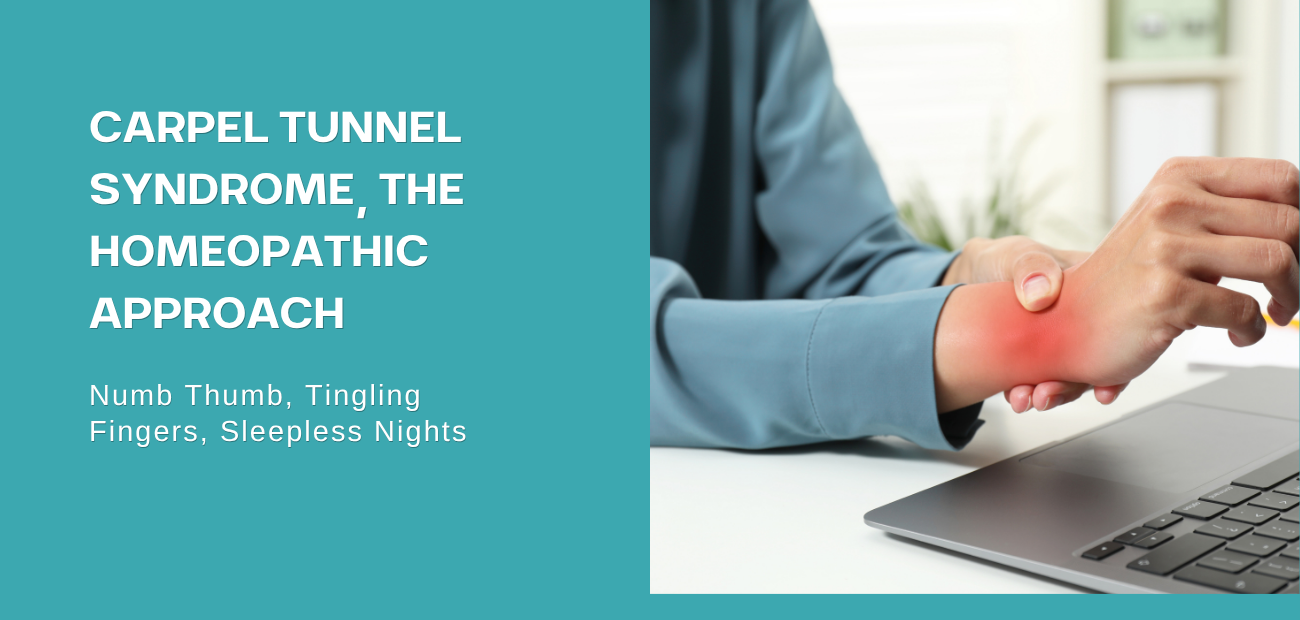
Numb Thumb, Tingling Fingers, Sleepless Nights? A Complete Guide to Carpal Tunnel Syndrome and the Homeopathic Approach
Waking up with numb hands? Learn the early signs, causes and stages of carpal tunnel syndrome, simple self-care steps, and how homeopathy can support relief.
You reach for your morning coffee and your thumb feels like it’s asleep. You shake your hand, the tingling fades, and you carry on. But a few weeks later it wakes you at 2 a.m., and now you’re dropping your phone.
Sounds familiar? You may be dealing with carpal tunnel syndrome (CTS), one of the most common hand conditions in the world. The good news: when you catch it early, there is a lot you can do. In this guide, we’ll cover what CTS is, why it happens, the warning signs, and how homeopathy can fit into a gentle, whole-person plan for relief.
What Is Carpal Tunnel Syndrome?
Inside your wrist is a narrow passage called the carpal tunnel, formed by small wrist bones and a tough ligament across the top. Through it run nine tendons that bend your fingers and thumb, along with the median nerve, which gives feeling to your thumb, index, middle and half of your ring finger, and powers the small muscles at the base of your thumb.
Because the walls of this tunnel don’t stretch, any swelling or crowding raises the pressure on the nerve. That pressure is called median nerve compression, and it’s what causes the tingling, numbness, burning and weakness of CTS.
What Causes Carpal Tunnel Syndrome?
There is rarely a single cause. Usually several factors stack up:
- Repetitive hand use: typing, mouse work, texting, gaming, sewing, driving, playing instruments, or using vibrating tools.
- Wrist posture: keeping the wrist bent or extended for long periods.
- Hormonal and fluid changes: pregnancy and menopause can increase tissue swelling.
- Medical conditions: diabetes, thyroid imbalance, rheumatoid arthritis, gout, obesity and other metabolic conditions.
- Injury: a wrist fracture or sprain can change the space in the tunnel.
- Family history: some people simply have a narrower tunnel.
- Age and gender: CTS is more common after 40 and affects women more often than men.
Early Warning Signs You Shouldn’t Ignore
- A “numb thumb” with tingling in the thumb, index, middle and ring fingers (the little finger is usually spared).
- Night-time symptoms: pain or pins-and-needles that wake you up, because we tend to sleep with our wrists curled.
- Symptoms during daily tasks: driving, cycling, holding a phone or reading a book.
- “Flick sign”: you shake your hand to get relief.
- Weak grip or dropping things: a sign the nerve is under more strain.
- Clumsiness with buttons, coins or other fine tasks.
Good to know: pain without any numbness or tingling in these fingers is often not carpal tunnel syndrome, so a proper assessment matters.
The Three Stages of CTS
- Mild: occasional tingling or burning after activity that settles when you shake your hand.
- Moderate: symptoms are more frequent and last longer, and grip may begin to weaken.
- Severe: symptoms are constant, and the small thumb muscles may waste away (atrophy).
The earlier you act, the more options you have. Long-standing, unchecked compression can lead to lasting loss of strength and fine movement.
Simple Habits That Take Pressure Off Your Wrists
Before anything else, these small changes can make a real difference:
- Keep wrists neutral: straight, not bent up or down, while typing and using a mouse.
- Follow the 20-20 rhythm: every 20 minutes, pause for 20 seconds, open and close your hands and roll your shoulders.
- Switch hands and tasks at the first sign of fatigue.
- Soften your grip on pens, phones, steering wheels and tools.
- Set up your desk: keyboard at elbow height, forearms supported, and an ergonomic mouse.
- Try a night splint to hold your wrist straight while you sleep.
- Try gentle nerve-gliding and stretching exercises taught by a qualified practitioner.
- Support your general health: manage blood sugar, stay active and keep a healthy weight.
- Keep warm: cold hands tend to feel stiffer and more painful.
Conventional Treatment: What to Expect
Doctors usually diagnose CTS from your symptoms and a physical exam, sometimes with nerve conduction tests. Options range from splints, anti-inflammatory medicines and steroid injections to surgery (open or endoscopic release) for severe cases, where the aim is to relieve pressure on the nerve.
How Can Homeopathy Help With Carpal Tunnel Syndrome?
Homeopathy is a system of medicine that looks at the person, not just the wrist. Two people with the same diagnosis can have very different symptoms, triggers and lifestyles, so their homeopathic plans may look quite different.
Here is why many patients with mild to moderate CTS choose to explore homeopathic care:
1. A whole-person assessment
A detailed consultation looks at what makes your symptoms better or worse (heat, cold, motion, rest, night-time), your work habits, sleep, stress levels, digestion and any underlying conditions such as thyroid issues or diabetes. This often uncovers contributing factors that get missed in a quick appointment.
2. Individualised, gentle remedies
Homeopathic medicines are highly diluted and prescribed according to your symptom picture. Remedies that homeopaths commonly consider for hand and wrist complaints include Causticum, Ruta graveolens, Hypericum, Rhus toxicodendron, Arnica and Calcarea carbonica. The right choice depends entirely on your individual case, so please don’t self-prescribe.
3. A comfortable option for people who prefer a gentle approach
Because homeopathic medicines are non-habit-forming and generally well tolerated, many people, including those who are pregnant or who can’t tolerate anti-inflammatory tablets, like to discuss them with a qualified practitioner. Always tell your doctor about every treatment you are using.
4. It works alongside lifestyle and ergonomic care
Homeopathy is best seen as one part of a complete plan: ergonomic changes, rest breaks, exercises, a night splint where needed, and nutrition and stress support all work together.
5. Support for the root contributors
By addressing associated issues such as fluid retention, hormonal changes, stress-related muscle tension and sleep disturbance, a whole-person approach aims to improve overall wellbeing, not just silence a symptom.
An honest word on the evidence
Scientific research on homeopathy for carpal tunnel syndrome is limited, and results across studies on homeopathy in general are debated. Many people report feeling better with individualised care, but homeopathy should not replace urgent medical treatment. If you have constant numbness, visible muscle wasting, or weakness that is getting worse, a prompt assessment with a hand specialist is essential, as these can be signs that surgery may be needed to protect the nerve.
When Should You See a Doctor?
Book an appointment if:
- Tingling or pain wakes you from sleep repeatedly.
- Symptoms interfere with your work or daily life.
- Your grip is weakening or you keep dropping things.
- Numbness has become constant.
- Symptoms started suddenly after an injury.
Frequently Asked Questions
Can carpal tunnel syndrome go away on its own? Mild cases linked to a temporary cause, such as pregnancy, can settle once the cause passes. Cases driven by ongoing strain or underlying conditions usually need active care.
Why is carpal tunnel worse at night? We often sleep with our wrists bent, and fluid can shift in the hands when lying down, both of which increase pressure on the median nerve.
Is homeopathy safe for carpal tunnel syndrome? Homeopathic medicines are highly diluted and are generally considered safe when prescribed by a qualified practitioner. They are best used to complement, not replace, appropriate medical care for moderate to severe nerve compression.
How long does improvement take? It varies with the stage, duration of symptoms and your lifestyle. Early-stage cases typically respond sooner than long-standing ones, and consistent ergonomic changes help speed progress.
Can I still use a wrist splint with homeopathic treatment? Yes. Splints are a simple and effective support, especially at night, and fit well alongside homeopathic care.
Take the First Step Toward Happier Hands
Your hands carry you through every day, so don’t wait until the tingling becomes constant. If you’re noticing a numb thumb, night-time pain or a weakening grip, a personalised consultation can help you understand what’s driving your symptoms and build a plan that suits your body and lifestyle.
Book a consultation with Dr. Bijal Karia today and give your hands the care they deserve.
Disclaimer: This article is for general information and does not replace personal medical advice, diagnosis or treatment. Please consult a qualified healthcare professional about your symptoms.